A technology does not become obsolete just because it is old. It becomes obsolete when it no longer does its job effectively. And that is clearly not the case for 4–20 mA.
Why is 4–20 mA still so common in industry?
Because it is still useful.
At a time when everything seems to push toward more connectivity, more protocols, and more complexity, it is worth remembering something simple:
A technology does not become obsolete just because it is old. It becomes obsolete when it no longer does its job effectively.
And that is clearly not the case for 4–20 mA.
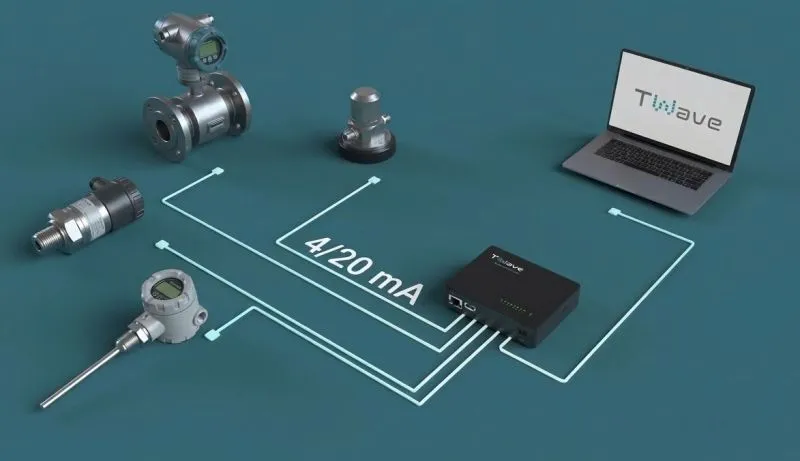
Even today, it remains a highly effective solution for transmitting sensor signals or process variables with robustness, low sensitivity to electrical noise, and predictable behavior, even over relatively long distances.
At TWave, we have also used it as an output interface to plant control systems, when the priority was to deliver process information in a direct, reliable way without unnecessary complexity.
There is also another important point: not every integration needs more connectivity.
In some cases, a well-designed analog interface not only simplifies the architecture, but also avoids unnecessary dependencies and reduces cybersecurity exposure.
Industrial systems will no doubt continue to become more digital. But they will still rely on technologies that have spent decades proving something very difficult to beat:
Real-world reliability.