There is no more important machine than a human life. But behind every safe surgery lies a critical infrastructure that must work perfectly.
The most important “machine”
A patient waiting for an operation. A medical team ready. An operating room prepared. I think we can all agree on one thing: there is no more important “machine” than a human life.
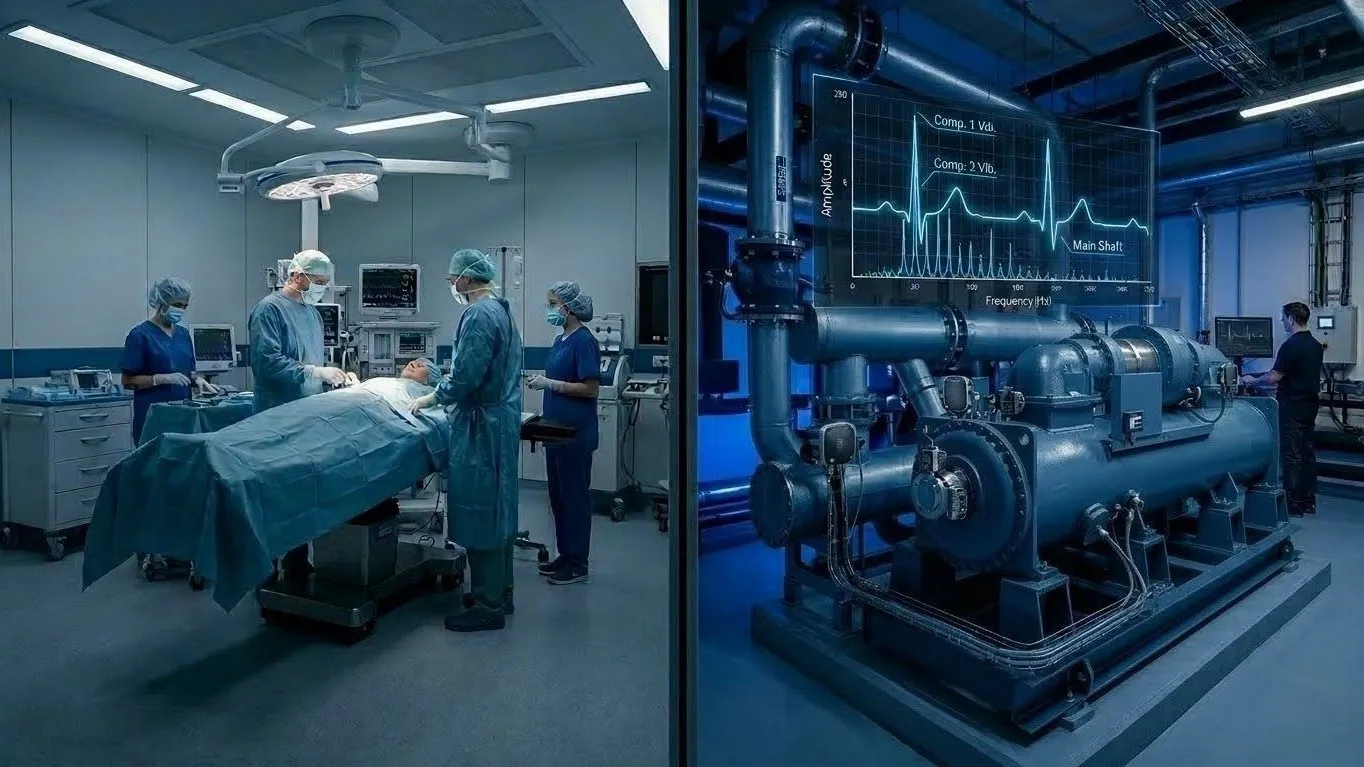
But behind every safe surgery lies a critical infrastructure that must work perfectly. For example: large centrifugal chillers are responsible for maintaining the strict temperature and humidity conditions required in operating rooms.
These systems usually have redundancy. But what happens during a heat wave, with a high number of procedures scheduled, or when one of the units is already out of service?
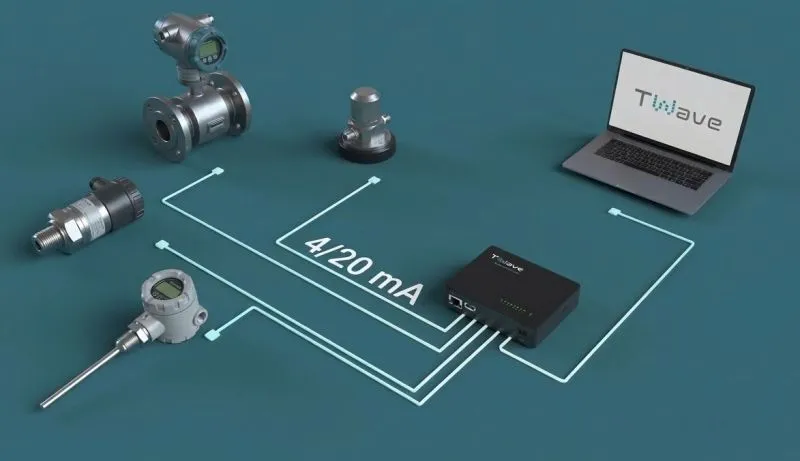
A TWave T8 was installed in a hospital to monitor the condition of one of these chillers. The system detected a defect on the inner race of a bearing.
Extending the medical analogy, the TWave T8 does something similar to an electrocardiogram — but for the bearing. The vibration spectrum clearly showed the defect signature: its characteristic frequency, the harmonics, and the sidebands.
Thanks to this, the maintenance team was able to track its evolution and plan the replacement at the most appropriate time:
- No unexpected failures.
- No interruptions.
Because predictive maintenance is not always just about protecting machines. It is about protecting people.